
I, The One — Fun Fighting Game
CASUAL AZUR GAMESAction
4.36.09K Reviews
- Version
- 3.78.09
- Installs
- 100.00M
- Age Rating
- Everyone 10+
Screenshots
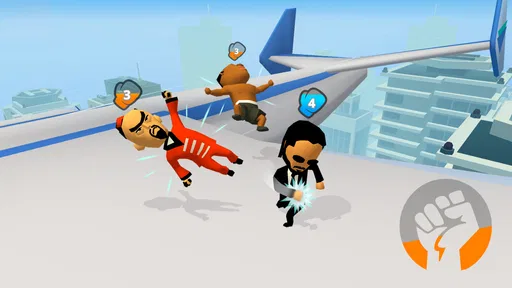
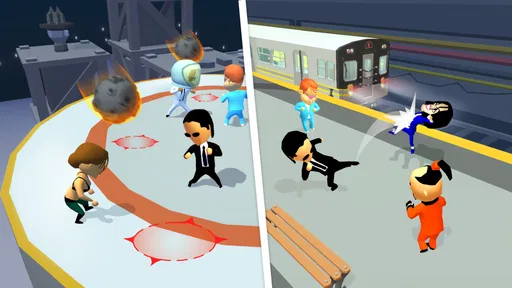
Our Review of I, The One — Fun Fighting Game
 Analysis by Appyee
I, The One is best approached as a quick, playful arena brawler rather than a traditional fighting game built around long move lists and precise combos. When I want a match that gets moving without asking me to study a complicated control scheme first, that directness is appealing. The point is to keep your fighter in the arena and knock opponents out, so the fun comes from movement, timing and the scramble of several combatants sharing the same space.
That focus also sets expectations. I wouldn’t choose it as a substitute for a technical one-on-one fighter, where learning exact inputs and counterplay is the main attraction. I would choose it when I have a few spare minutes and want something physical and easy to pick up. The experience is light in tone, but a crowded fight can still demand quick decisions: swinging at the nearest rival is not always as useful as moving to a safer position first.
A free download, with purchases to consider
I, The One — Fun Fighting Game is a free action game from CASUAL AZUR GAMES. It has an average rating of 4.3 from around 315,000 ratings, and has been installed over 100 million times. That reach makes sense for a game whose basic appeal is easy to grasp, though popularity alone doesn’t tell me whether its match style will suit you.
There are in-app purchases, with individual items listed from $0.99 to $99.99. I treat that range as a reason to check the purchase details before spending, not as proof that paying is necessary or that purchases provide a competitive advantage. The game is rated Everyone 10+, and its free entry point makes it easy to try the core idea before deciding whether it deserves more of your time or money.
The practical question is less “Is it free?” than “Will I enjoy the loop enough to keep playing?” If you are careful about accidental spending, it is sensible to review your device’s purchase settings before handing the game to a younger player. That small precaution applies especially when a game offers optional items across a broad price range.
Jump Into the Action
The first thing I noticed when I fired up I, The One was the simplicity of its design. The game doesn’t waste time with long tutorials or complicated storylines. Instead, you’re thrown directly into the action. You control your fighter using a virtual joystick on the screen, and tapping and swiping are all you need to land some impressive punches and kicks.
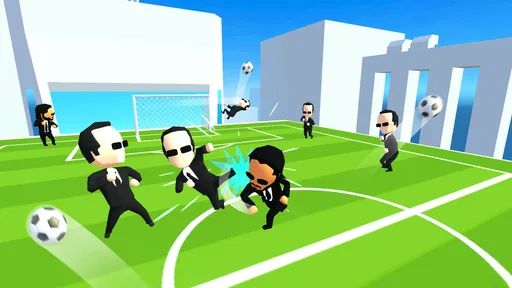
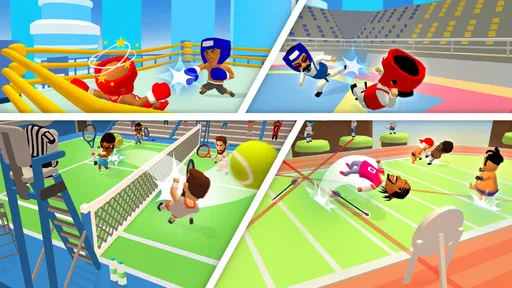
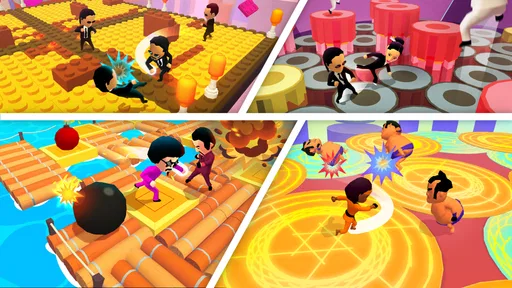
What’s cool is that it’s not just about punching your opponent. You can move around the arena, dodge attacks, and use the environment to your advantage. This keeps every fight fresh and exciting. Plus, the arenas are imaginative and varied, from rooftops to boxing rings, adding a fun layer to the gameplay.
Making short sessions count
The simple controls are useful when I’m playing in a small window of free time: a break between tasks, a short wait, or a commute where I can safely look at my phone. Rather than needing to remember a chain of inputs, I can focus on where the other fighters are and whether I’m about to be boxed in. A quick session can feel complete on its own, which is a better fit for casual play than a game that expects a long uninterrupted run.
One small but meaningful habit is to treat movement as part of the attack. In a free-for-all, chasing a single opponent into a bad position can leave me exposed to someone else. I get more out of the arena when I pause long enough to notice where the crowd is gathering, then reposition before committing to a swing. That choice won’t guarantee a win, but it makes the movement-and-dodge side of the game matter rather than turning every fight into frantic tapping.
This is also where the game differs from many familiar fighting games. Traditional fighters often reward memorizing combinations and reading one opponent at a time; here, the appeal is a looser, more crowded brawl with environmental awareness. If you want deliberate duels and a deep competitive ruleset, that usual alternative may be more satisfying. If you want a lighter match where the arena itself affects your decisions, this format has a distinct charm.
Customize Your Fighter
Customization is a big part of the fun! You can upgrade your fighter's skills and outfit them with different costumes as you progress. This gives a personal touch to the game and keeps you invested in your character’s journey. Whether you want your fighter to look like a street brawler or a superhero, the choices are plenty.
And let’s talk about the upgrades. As you win fights, you earn coins, which can be used to boost your fighter's power, health, and speed. This progression system gives you a reason to keep coming back, trying to make your fighter the best in the game.
Progress without losing sight of the fight
Progression gives a returning player something to work toward beyond simply winning the next round. I’d think about upgrades as a way to shape the kind of fighter I prefer, rather than assuming that one stat is automatically the best choice. If I find that I’m often caught before I can reposition, speed may feel more useful to my play than extra power; if I can stay in the action but lose exchanges, another improvement may make more sense. The useful choice depends on what is actually going wrong in my matches.
Costumes and performance upgrades serve different purposes, so I wouldn’t judge a purchase or a reward by appearance alone. A costume can make a fighter feel more personal, while a stat boost affects how that fighter handles a fight. I’d keep an eye on which kind of reward I’m pursuing, especially if I’m trying to progress without spending: the game’s progression loop is part of the appeal, but it can also encourage repeated play to build up a character.
For someone who only wants an occasional match, that ongoing development may be a pleasant extra rather than a reason to grind. For a player who wants every upgrade quickly, it could become the part that creates pressure. I’d recommend enjoying the fights first and letting upgrades follow naturally; if progress starts to feel like a chore, the short-session format is a good reason to stop and return later instead of forcing another round.
Multiplayer Mayhem
One of the standout features of the game is its multiplayer mode. You can jump into online matches and test your skills against players from around the world. The multiplayer matches are chaotic and thrilling, with up to 10 players battling it out in a free-for-all. It’s survival of the fittest, and every match feels like a new challenge.
The matchmaking system is pretty quick, so you’re never left waiting too long for a game. And the best part? Defeating a real human opponent gives you an adrenaline rush that’s hard to beat!
What fairness looks like in a crowded match
Human opponents make a match less predictable than simply repeating the same approach against a familiar pattern. At the same time, a crowded free-for-all doesn’t always feel like a clean test of individual skill: several fighters can pressure the same space, and a well-timed move may matter as much as a careful plan. I enjoy that uncertainty as part of the spectacle, but players who want every result to feel like a direct, balanced duel may find the format messy.
I also wouldn’t assume that purchases determine who wins. The game has paid in-app items, but that fact alone does not establish what those items do or how they affect match outcomes. If competitive fairness is your main concern, it’s worth separating what is clear—the game can be played for free and offers optional purchases—from what cannot be concluded just from that: whether any purchase changes the balance between players. I’d try the free experience and decide from what I actually encounter rather than spending to keep up with an assumption.
For a fairer-feeling session, I find it useful to judge the game by the decisions it asks me to make, not by a single defeat. In a free-for-all, a loss can come from being surrounded or caught while focused elsewhere; that doesn’t necessarily mean the controls are unresponsive or another player has an advantage. If those chaotic outcomes are what you dislike, a one-on-one fighting game is likely a better fit than trying to turn this format into a precise contest.
Visuals and Soundtrack
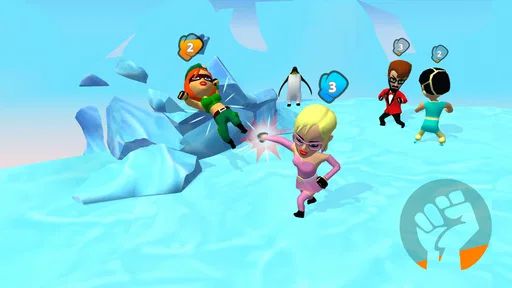
The graphics in I, The One are vibrant and cartoonish, which fits perfectly with the game’s light-hearted nature. The arenas are detailed, and the animations are smooth, making every punch and kick feel impactful. It’s visually pleasing, and even on a smaller screen, the game looks great.
Complementing the visuals is an energetic soundtrack that keeps your adrenaline pumping. The sound effects are satisfying too, with every hit and fall accompanied by punchy audio that adds to the immersion.
Where it fits—and where it doesn’t
The visual style helps the action read as playful rather than realistic, which suits quick matches and makes the game easier to recommend to someone who wants a casual brawler. It is not the same experience as a story-led action game or a carefully structured fighting game. There is no need to come for a deep narrative; the draw is stepping into the arena, reacting to other fighters, and seeing how a brief bout unfolds.
A realistic everyday use case is a short break when I want to play something more active than a puzzle but don’t have time to commit to a long session. I can jump into the fighting, enjoy the immediate feedback of movement and hits, then put the phone away. On the other hand, if I’m playing somewhere I need to stay focused on my surroundings, or I want a calm game that can be left running while I multitask, a real-time arena brawl is not the right choice.
The game’s Android requirements are also worth checking before installing: it supports Android 7.0 and later. Its current version is 3.78.07, and it was released on March 10, 2020. Those details give Android users a straightforward compatibility check, but they don’t guarantee how it will perform on every individual device. If you’re deciding on a phone with limited free space or older hardware, checking that your device can install and run it comfortably is more useful than assuming every Android experience will be identical.
What I would check before committing
People often want to know whether they can enjoy the game without paying, whether it is suitable for a younger player, and whether multiplayer makes it competitive. The free download provides a way to try the central experience, while optional purchases mean I would keep spending controls in mind. The Everyone 10+ rating is a useful age guide, but a parent should still decide whether the game’s fighting and online play are appropriate for the child in their care.
For online matches, I’d also consider the practical setting: a stable connection and a few uninterrupted minutes make more sense than trying to play during a moment when the phone may be put away at any second. Since the main attraction is reacting to a live crowd of opponents, interruptions can make the action harder to follow. If you prefer something that pauses neatly whenever you need to look away, a single-player game designed around that kind of stop-and-start play may suit you better.
The developer is CASUAL AZUR GAMES, and the game’s large audience suggests it has broad casual appeal, but neither its popularity nor its rating guarantees a perfect fit. Its average rating is 4.3, backed by around 6,100 written reviews. I take that as useful context, not a substitute for trying the controls yourself: the deciding factor is whether you enjoy a loose arena scrum more than a structured duel.
Final Thoughts
Overall, I, The One is a fantastic pick for anyone looking to dive into a fun and accessible fighting game. It’s perfect for short bursts of gameplay, whether you’re on a break or just need a quick gaming fix. The combination of simple controls, engaging multiplayer, and customization options makes it a game worth downloading.
So, if you’re ready to step into the ring and show the world what you’re made of, give I, The One a try. You might just find yourself hooked on this entertaining brawler!
My trust verdict
I’d recommend it to players who want an easy-to-enter action game, enjoy the unpredictability of multiplayer scrambles, and like having a fighter to improve over time. I’d steer away from it if your priority is a tightly balanced one-on-one competition, a deep combat system, or a game that never nudges you toward continued progression. Its free entry makes testing the basic appeal a reasonable first step, but the optional purchases are a reason to set personal spending boundaries rather than assume that every item is needed.
My overall trust in the experience comes with that distinction: the game’s broad appeal and clear pick-up-and-play focus are easy to understand, while the presence of purchases deserves a little care. I would install it for lively, short arena bouts, play without treating upgrades as a deadline, and decide for myself whether the multiplayer chaos is fun. If that is the kind of fight you want, it earns a place in the casual rotation; if you want precision and transparent competitive parity above all else, I’d look elsewhere.
Verdict
Strengths of I, The One — Fun Fighting Game
- Engaging combat mechanics
- Diverse character selection
- Simple controls for newcomers
- Regular content updates
- Vibrant and colorful graphics
Limitations of I, The One — Fun Fighting Game
- Repetitive gameplay can tire
- Occasional in-game ads
- Limited customization options
- Requires constant internet
- Can be pay-to-win oriented
Other Releases by CASUAL AZUR GAMES
View All
Worms Zone .io - Hungry Snake
Action4.3

Stack Ball - Crash Platforms
Arcade4.5

STAR: Super Tricky Amazing Run
Arcade4.2

State.io — Conquer the World
Strategy4.1
Similar Picks in This Category
View All
Temple Run 2: Endless Escape
Imangi Studios4.1

PUBG MOBILE
Level Infinite4.3

Free Fire: 9th Anniversary
GARENA INTERNATIONAL I4.4

Talking Tom: Hero Dash Run
Outfit7 Limited4.3

slither.io
Lowtech Studios3.9

Sniper 3D:Gun Shooting Games
Wildlife Studios4.6
Frequently Asked Questions
What is the gameplay like in I, The One?
I, The One offers an engaging fighting experience where players battle in various arenas with different opponents. The game is designed with intuitive controls, making it easy to perform moves like punches, kicks, and special attacks. Each level introduces new challenges, ensuring players remain entertained as they advance.
Are there different characters to choose from?
Yes, I, The One features a variety of characters, each with unique strengths and abilities. Players can unlock new fighters as they progress, allowing them to experiment with different fighting styles and strategies. Customization options further enhance the experience, enabling players to personalize their chosen character.
Is the game free to play, or are there in-app purchases?
I, The One is free to download and play, but it does offer in-app purchases. These purchases can enhance gameplay by unlocking characters, customization items, and power-ups more quickly. While not necessary to enjoy the full game, they can provide advantages and enrich the gaming experience.
What kind of graphics and sound quality can players expect?
The game boasts vibrant and colorful graphics that bring the fighting arenas and characters to life. Sound effects and background music are well-crafted, adding to the excitement and atmosphere of the battles. Overall, the visual and auditory elements enhance the fun and immersion of the game.
Does I, The One require an internet connection to play?
I, The One can be played both online and offline. However, certain features, like real-time multiplayer battles and leaderboard tracking, require an internet connection. Playing offline is perfect for practice and solo gameplay, while online connectivity offers more competitive and interactive experiences.
Play our best games!


